Most Himachal trips end at a crowded mall road with a queue for momos. This one ends at a village where the road simply runs out. If you want to see it without planning every turn yourself, ourChitkul and Kalpa trip from Delhi covers the whole route in four days, with the driving, stays, and sightseeing already sorted.
But let's talk about the place first. Because a Kinnaur Valley trip from Delhi isn't like a weekend in Manali. The drive is long. The roads are narrow and sometimes scary. The reward is a quiet valley, a fast-running river, and a village that sits so close to the Tibet border that the map almost gives up.
This guide covers what Chitkul really is, how the route works, what the trip costs, and what you should know before you go.
What "India's Last Village" Actually Means
You'll see the phrase "last village of India" on almost every Chitkul post. Is it just marketing? Not really, though it needs a little explaining.
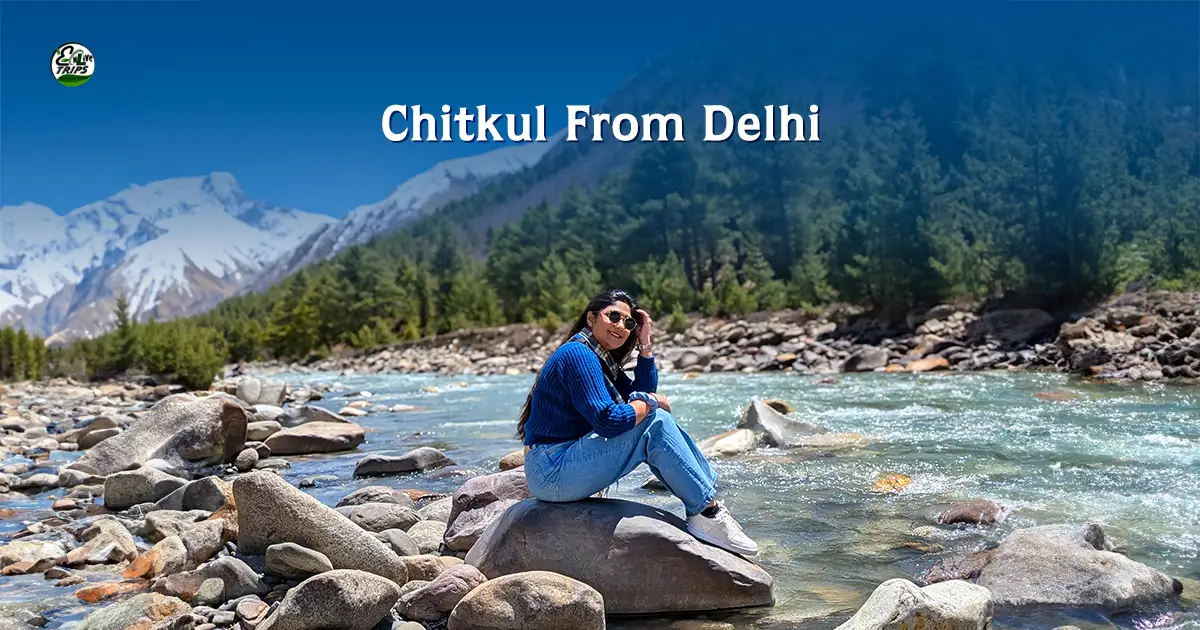
Chitkul sits on the right bank of the Baspa River, at about 3,450 metres (roughly 11,320 feet). It is the last village of the Baspa Valley and the last village on the old Hindustan-Tibet trade route. It is also the last point in India you can travel to without a permit. Go further, and you reach army and ITBP (Indo-Tibetan Border Police) territory, where civilians can't go.
A few more things make Chitkul stand out:
● Clean air: A study by the Centre for Atmospheric Sciences at IIT Delhi named it the place with the cleanest air in India. Coming from Delhi, you'll feel the difference by the first evening.
● Old wooden houses: Many homes use slate or wooden plank roofs, built in the traditional wood-and-stone style of the region.
● Two temples, side by side: A Kagyupa Buddhist temple and a temple to Mathi, the local goddess, sit almost next to each other. That mix of faiths is normal in Kinnaur.
● A quiet winter: Snow covers the village for much of the cold season, and many families move to lower parts of Himachal until it melts.
There's an old belief in Kinnaur that its people, the Kinnauras, sit halfway between gods and humans. After a few days here, that idea doesn't feel silly.
Why Kinnaur Feels Different From Other Himachal Trips
Here's my honest take. Manali and Shimla are hill stations you visit. Kinnaur is a place you have to travel into.
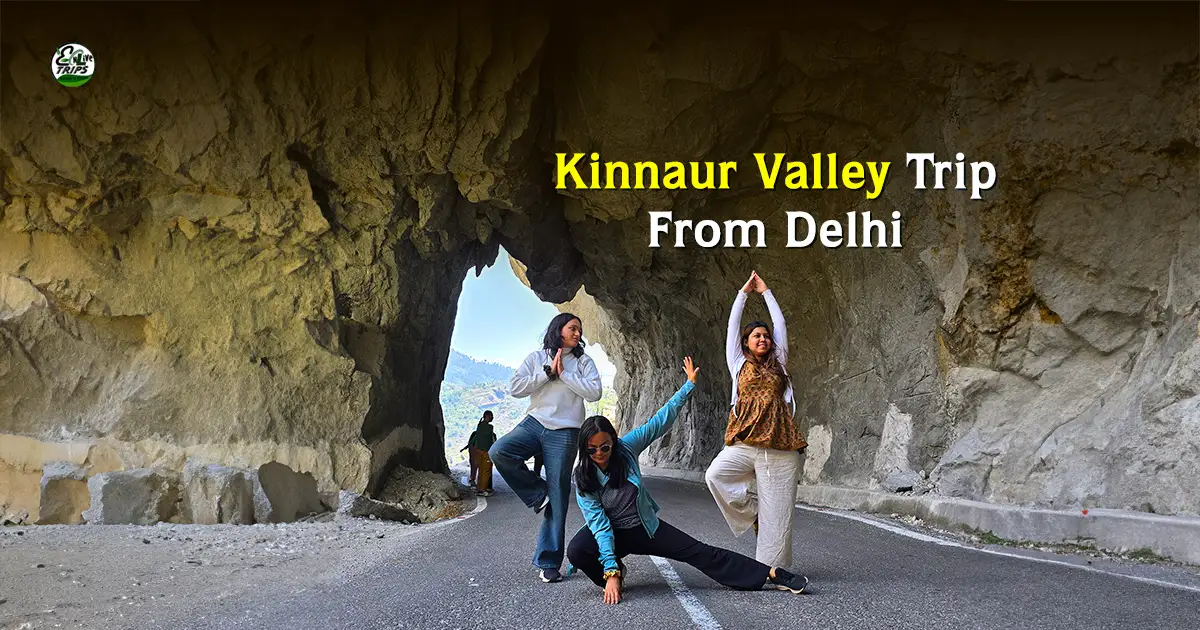
The valley sits deeper in the mountains, along the old Hindustan-Tibet Road that runs beside the Sutlej River. The landscape changes as you go. Green hills near Shimla slowly turn into steep, dry rock. Apple orchards appear in clusters. Then the snow peaks of the Kinner Kailash range show up near Kalpa, and you realise you've reached a very different Himachal.
That effort filters out most of the crowd. You still meet other travellers, but you don't fight for a photo spot. For anyone tired of the usual hill station rush, a Kinnaur trip feels like a reset.
Delhi to Chitkul: The Route and the Roads Nobody Talks About
Here's the part most blogs skip. Delhi to Chitkul is roughly 570 to 600 km, and it's not a one-day drive. Most people split it into two legs.
Leg one: Delhi to Shimla
This is the easy part. Groups usually board an overnight Volvo bus from Delhi and reach Shimla the next morning, so you sleep through most of it.
Leg two: Shimla to Chitkul
This is the real journey, about 250 km of mountain road that takes a full day with stops. You follow the Hindustan-Tibet Road into Kinnaur, pass Sarahan and the Kinnaur Gate, and later turn off near Karcham into the Baspa Valley. From there, the road runs through Sangla and Rakchham before it finally reaches Chitkul.
Some things to expect on these roads:
● Narrow stretches: Two vehicles often squeeze past each other with the valley falling away on one side.
● Landslide patches: Rain or snow can block sections for hours.
● Very slow progress: A short distance on the map can take a long time on the ground.
● Patchy phone signal: Don't count on maps working everywhere.
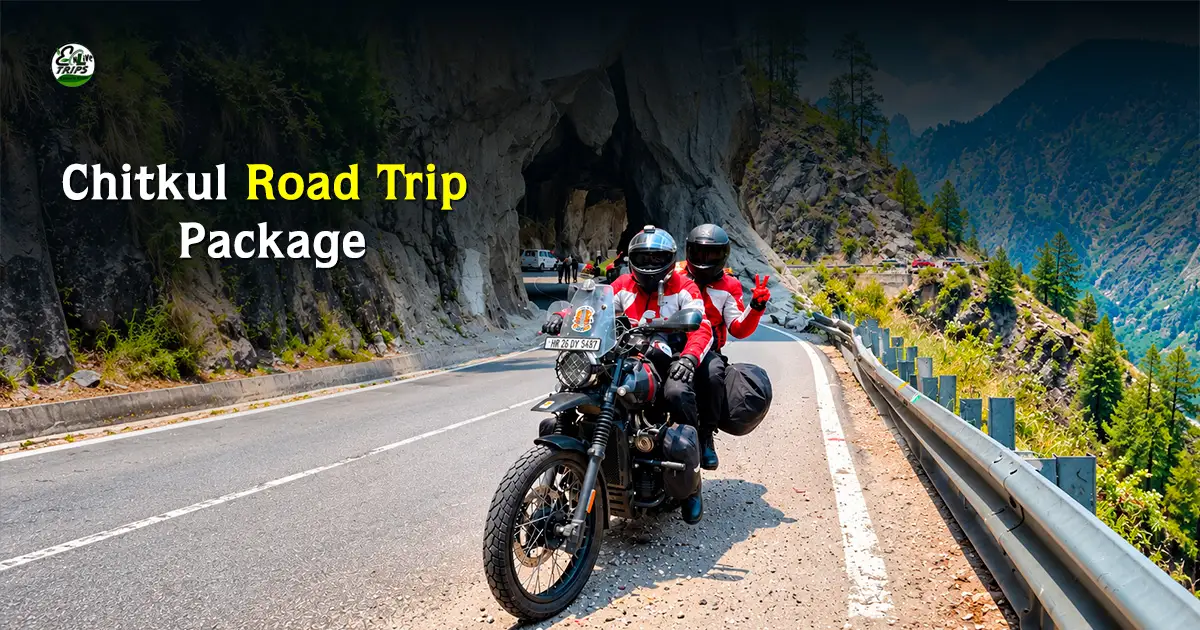
This is a big reason many travellers prefer a Chitkul trip package over self-driving. An experienced driver who knows every bend makes a huge difference here. If you'd rather get to Chitkul from Delhi without worrying about the road, this is the smarter way to go.
Best Time to Visit Chitkul
Chitkul changes completely with the seasons, so pick your window carefully.
● April to June: Pleasant days, clear views, and green slopes. This is the easiest season for first-timers, and the regular batches of our Chitkul trip run in spring.
● July to August: Monsoon. Landslides are more likely, so most people avoid it.
● September to October: Crisp air, clear skies, and apples ripening in the orchards. Many repeat visitors call this the best-looking season.
● December to March: Deep winter. The village turns white and looks unreal, but roads can close after heavy snow. Only go with proper plans and extra buffer days.
If snow is your dream, ourChitkul Kalpa Christmas and New Year trip is built for that window. Just keep your expectations honest. Snow is beautiful, but it also decides the schedule.
Kinnaur Valley Trip Itinerary: Day by Day
Here's how a 3N/4D Chitkul and Kalpa trip usually runs, based on our actual itinerary.
Day 0: Delhi to Shimla (overnight)
You meet the trip coordinator at Kashmere Gate in the evening, do a quick introduction, and board the overnight bus. Everyone's a stranger at 10 p.m. By midnight, people are already swapping snacks.
Day 1: Shimla to Sarahan to Chitkul
You reach Shimla in the morning and switch to a traveller for the mountain drive. On the way, you stop for breakfast, visit the Bhimakali Temple in Sarahan, and pass the Kinnaur Gate, the famous entry point to the district. You reach Chitkul late in the evening, check in, and rest. It's a long day, so keep your expectations simple. Tonight is for dinner and sleep.
Day 2: Chitkul Exploration and Day Hike
This is the day the trip is built around. After breakfast, you walk toward the ITBP camp for wide views of the Baspa Valley and the snow-covered peaks behind it. Then you walk along the river and stop at the Aakhri Dhaba, popularly called the last dhaba of India. Chai here tastes better than it should. You'll also see the old Mathi Temple, wander through village lanes, and, in season, walk through apple orchards.
Day 3: Chitkul to Kalpa
After breakfast, you drive toward Kalpa with a stop at Sangla. In Reckong Peo, the district headquarters, you can browse the market and see the Kinner Kailash range. You also stop at a viewpoint near Roghi before reaching Kalpa village and its temple. Stay the night in a hotel in Kalpa.
Day 4: Kalpa to Shimla to Delhi
After breakfast, you leave Kalpa for Shimla with more views of the Kinner Kailash peaks on the way. In the evening, you board the bus to Delhi and reach the city early the next morning, tired and a little sunburnt. Worth it.
What the Chitkul Trip Package Includes
Before you book anything, know what you're paying for. Here's what our standard package covers.
Usually included:
● Travel by Volvo bus and traveller
● Two nights in Chitkul and one night in Kalpa (hotel or homestay)
● Three breakfasts and three dinners
● Local sightseeing and a day hike
● Trip coordinators and crew throughout
Usually not included:
● 5% GST
● Extra drinks, snacks, and meals outside the plan
● Tickets for sightseeing or activities outside the camp area
● Travel insurance and medical services beyond basic first aid
● Extra costs caused by weather, landslides, or road conditions
That last point matters. Kinnaur is a mountain region. If a landslide holds you up, the added cost isn't a surprise fee; it's part of how travel works here.
Chitkul Road Trip Package vs Self-Drive
Can you drive to Chitkul on your own? Yes. Many people do. But it helps to be honest about what you're signing up for.
A self-drive means 10 to 12 hours behind the wheel on unfamiliar mountain roads, hotel searches at the end of the day, and very little help if something breaks down between Sangla and Chitkul. That can be fun if you're an experienced hill driver with time to spare.
A Chitkul road trip package trades some flexibility for peace of mind. The driver knows the road. Hotels and homestays are booked. You're not doing route math in the dark. You also travel with a group, which is a real bonus on long, quiet stretches when the conversation keeps everyone awake.
So who wins? If you love driving and have a spare day, self-driving is great. If you have a long weekend and want to actually enjoy the scenery instead of gripping a steering wheel, a Chitkul road trip package is the better fit.
Christmas and New Year in Chitkul
If you want a snowy escape instead of a party in the city, this is a strong choice. OurChristmas and New Year special to Chitkul and Kalpa follows the same core route, with evenings planned around a warm bonfire and a winter mood in the valley. The trip departs around 24 December.
Two honest notes for winter travellers:
● Snow can change the plan: If heavy snowfall closes the road for large vehicles, we try to arrange a 4x4 or local vehicle. That extra cost is paid by the traveller.
● Bonfires depend on weather: They happen when conditions allow, and sometimes they just can't.
Winter batches also cost a bit more than regular ones. We'll cover the numbers in a moment.
How Hard Is This Trip?
The trip isn't a trek, and you don't need special fitness. The day hike in Chitkul is gentle. What most people feel is the altitude and the long drive days.
Chitkul is at 3,450 metres, much higher than Shimla or Sarahan. Some people get headaches, feel tired, or sleep badly on the first night. A few simple habits help:
● Drink plenty of water
● Move slowly on day one
● Skip alcohol on arrival
● Talk to your doctor before the trip if you have any heart, breathing, or altitude concerns
The long hours on the road are the other challenge. Bring motion-sickness tablets if you get queasy on curves. The bus and traveller rides are comfortable, but the hairpin bends are real.
What Does a Kinnaur Tour Package Cost?
Real numbers help more than a vague "starting from" tag.
Regular Chitkul and Kalpa trip (3N/4D):
● Triple sharing: about ₹10,499 plus 5% GST
● Double sharing: about ₹11,499 plus 5% GST
Christmas and New Year special (3N/4D):
● Triple sharing: about ₹12,499 plus 5% GST
● Double sharing: about ₹12,999 plus 5% GST
Budget a little extra for lunches, snacks, and shopping. Apples, caps, and shawls from local stalls are easy to overspend on. When you compare any Kinnaur tour package, check the inclusions line by line. A low price often hides missing meals or a hotel that's far from the village.
Who Should Go on This Trip
This trip suits more people than you might think.
● Solo travellers who want a group without the pressure of planning
● Friends and couples looking for a quiet, scenic weekend away from crowds
● Photography lovers, since the valley changes colour every hour
● First-time Kinnaur visitors who don't know which roads or stays to trust
● Anyone between 18 and 42, the age range for our group departures
It's a poor fit if you want nightlife, shopping streets, or a rushed checklist of sights. Kinnaur rewards slow, quiet people.
What to Pack
The weather in Chitkul changes fast, even in summer, so pack in layers.
● Down jacket or a warm main jacket
● Outdoor shoes with good grip
● Three pairs of cotton socks and quick-dry t-shirts
● Sunscreen (SPF 40 or higher), sunglasses, cap, and lip balm
● A day backpack (20 to 30 litres)
● One-litre water bottle
● Personal medicines and a small first aid kit
● Power bank, since charging can be tricky in remote spots
● Valid ID proof, even though no permit is needed for Chitkul
If you wear glasses, photochromic lenses work better than contacts in bright, dusty mountain light.
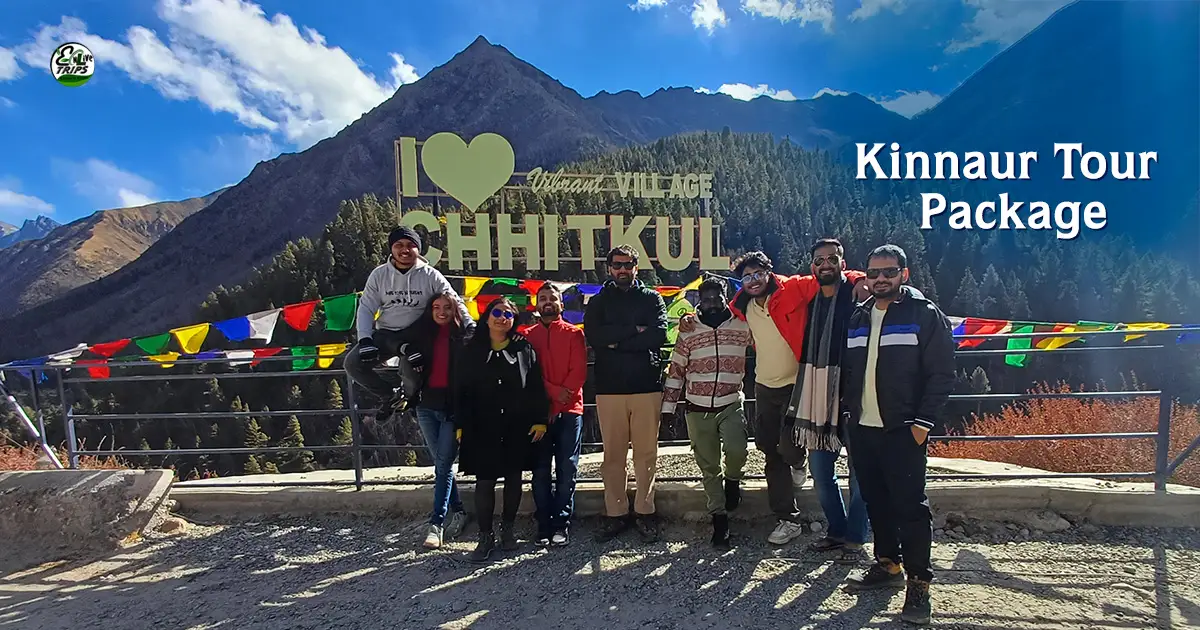
Planning Your Kinnaur Valley Trip
Some trips sell you a list of sights. Chitkul sells you something quieter: a river you can hear at night, air that smells clean, and a road that ends because the map does. It isn't the easiest place to reach, and honestly, that's the point.
If a Kinnaur Valley trip from Delhi sounds like your kind of escape, take a look at ourChitkul and Kalpa trip for current batches and pricing, and pick a date while the good weather window is still open.