Picture this. You wake up before sunrise, your breath fogging in the cold mountain air. Twenty minutes later, you're standing on a ridge above 12,000 feet, watching the sun light up Nanda Devi and Chaukhamba, like someone flipped a switch. No flight ticket. No visa. Just a weekend off from Delhi.
That's the Chopta Tungnath trek. And honestly, it's a little unfair how much beauty you get for how little effort it takes.
If you've been scrolling through your feed lately, chances are you've seen this place. Everyone's suddenly talking about it, including solo travellers, couples, college groups, and even families with teenagers. So let's break down exactly what this trek is, why the coming months are the smartest time to go, and what a proper Chopta Tungnath trek package should actually cost you.
What Is the Chopta Tungnath Trek? What is it Known for?
Chopta is a small meadow town tucked into Uttarakhand's Rudraprayag district, sitting at around 2,680 metres (8,790 feet). Locals call it the "Mini Switzerland of India", and for once, that nickname isn't just tourism marketing. Rolling green bugyals, dense Buransh forests, and a wall of snow peaks in the background; it genuinely looks unreal in photos.
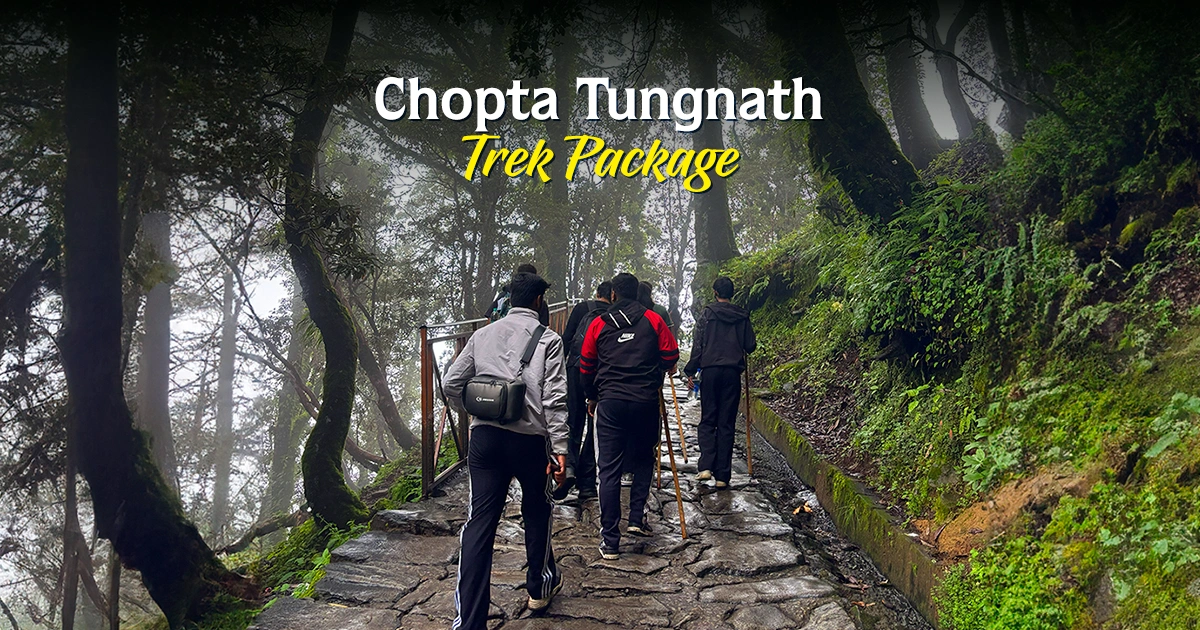
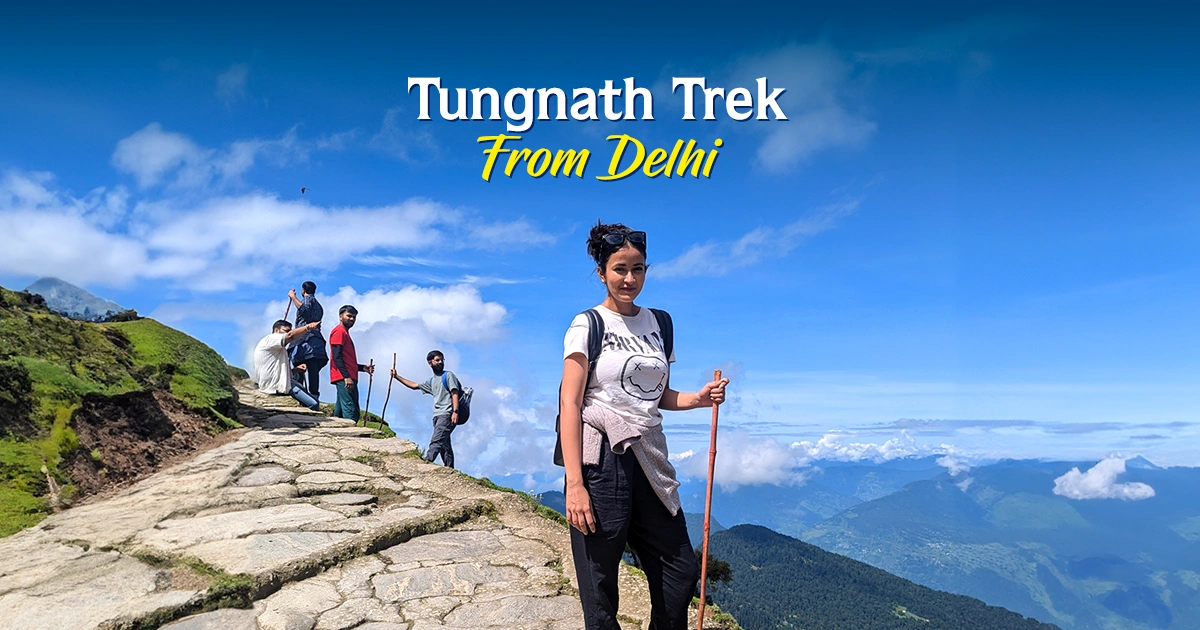
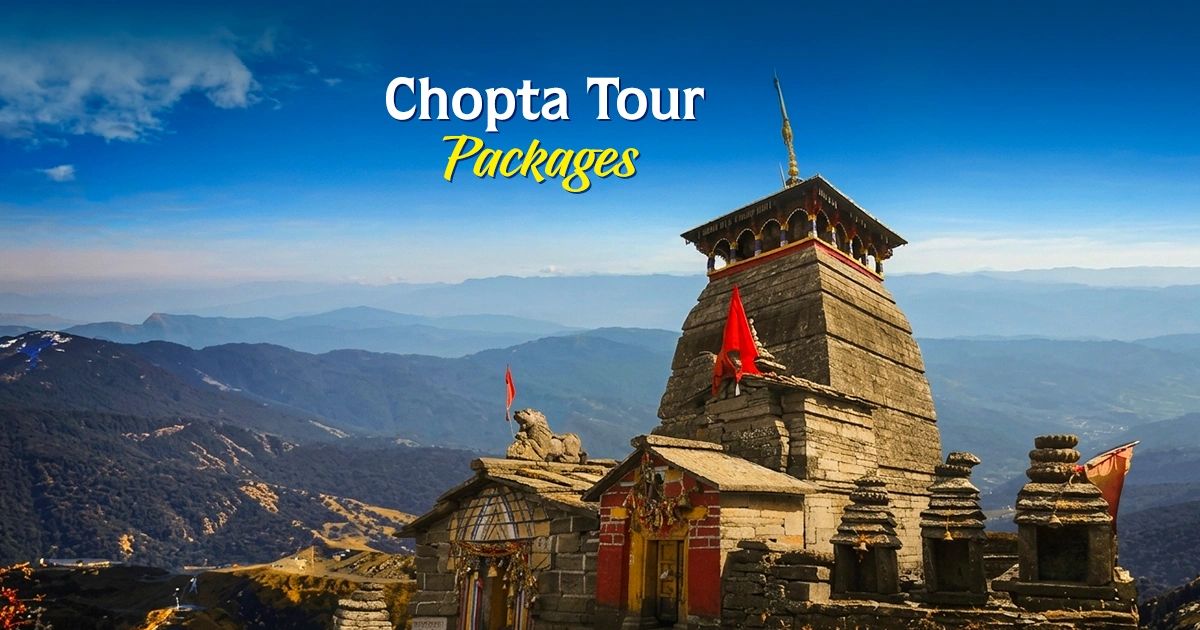
From Chopta, a trail winds up 3.5 kilometres to Tungnath Temple, sitting at 3,680 metres (12,073 feet). Here's the part that surprises most first-timers: this isn't just any temple. It's the highest Shiva temple on Earth and one of the five sacred Panch Kedar shrines. Legend says the Pandavas built it here while searching for Lord Shiva to seek forgiveness after the Kurukshetra war. Over a thousand years old, and it's still standing, still active, still drawing pilgrims and trekkers alike.
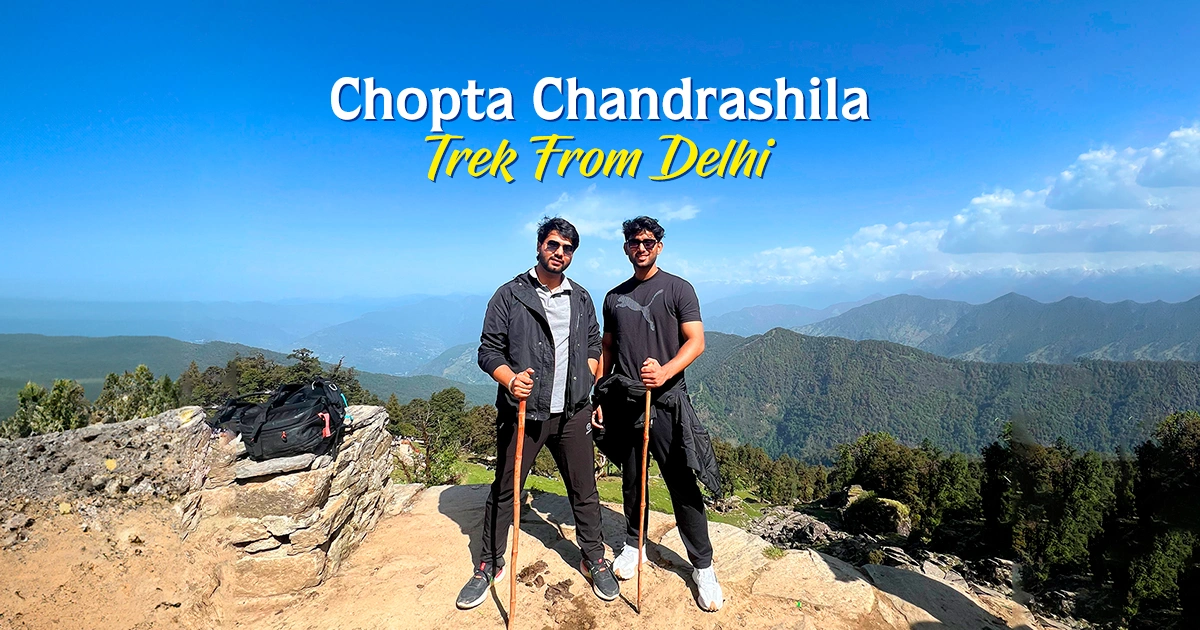
Most people don't stop at Tungnath, though. Another 1.5 km of steeper climbing gets you to Chandrashila Peak, at roughly 4,000 metres (13,123 feet). This is where the trek earns its reputation. On a clear day, you can see Nanda Devi, Trishul, Kedar Dome, and Chaukhamba lined up across the horizon. It's a 360-degree view that most treks in India simply can't match at this altitude, with this little effort.
Total round-trip distance? About 10 km. Total time on your feet? Usually 5 to 7 hours, including the summit push. That's why this is one of the best beginner-friendly Himalayan treks in the country. You don't need prior trekking experience. You just need decent fitness and warm clothes.
Why Post-Monsoon (September to November) Is the Smartest Window?
Here's something a lot of blogs won't tell you straight: Chopta looks completely different depending on when you visit, and not every season is equal.
Monsoon (late June through August) sounds romantic until you're actually on a muddy, slippery trail with zero visibility at the summit. Skip it. The rain doesn't just ruin your photos, but it makes the final Chandrashila stretch genuinely risky.
So what's left? Two solid windows: March to June and September to November. Both work. But post-monsoon has a few quiet advantages that make it the better pick right now.
● The air is washed clean
After the rains stop, dust and haze disappear from the atmosphere. Visibility on clear days is dramatically better than in peak summer, when heat haze often blurs the distant peaks.
● The meadows are still green, not yet frozen
By late November, frost starts creeping in. September and October give you the best of both, with lush bugyals underfoot and the first dusting of snow starting to appear on the higher peaks by late October.
● Fewer crowds than summer
May and June get busy because that's when Delhi schools close and families travel. September weekends are noticeably calmer.
● Cooler, more comfortable trekking temperatures
Daytime temps hover in a pleasant range instead of the sharper summer sun at altitude.
One practical thing worth flagging: Tungnath Temple itself typically shuts for winter around early November, when the idol is ceremonially moved down to Mukunath near Ukhimath. So if a temple visit matters to you and not just the summit view, aim for your trip before the first week of November.
How to Reach Chopta from Delhi?
There's no direct train, no airport, no shortcut. You're doing this by road, and that's actually part of the charm: the drive itself is scenic once you cross Rishikesh.
The standard route to visit Chopta and Tungnath is:
Delhi → Haridwar → Rishikesh → Devprayag → Srinagar (Garhwal) → Rudraprayag → Ukhimath → Chopta
Total distance runs somewhere between 430 and 450 km, and on the older route, that means a genuine 10 to 14 hour haul depending on traffic near Meerut and road conditions past Rudraprayag. It's long. There's no sugarcoating that part.
The good news? The new Delhi-Dehradun Expressway has changed the math. This 6-lane, access-controlled highway cuts the Delhi-to-Dehradun leg down from roughly 6 hours to about 2.5. If your operator routes you this way instead of the old Haridwar road, you can trim a couple of hours off the total journey. This is exactly why most 2026 packages now build the itinerary around an overnight drive, so you wake up already in the hills.
A quick geography note that trips up a lot of first-timers: Rudraprayag is where the Alaknanda and Mandakini rivers physically meet; it is a genuinely striking sight if you catch it in daylight. From there, you branch off toward Ukhimath, and the final 28-35 km stretch from Ukhimath to Chopta is where the road narrows and climbs seriously. This is not a stretch to attempt in your own car unless your driver knows mountain roads well.
A Realistic Day-by-Day Itinerary
Most Chopta Tungnath trek packages from Delhi run either 2N/3D or 3N/4D. Here's roughly how the shorter version plays out:
Day 1: Delhi to Chopta
Overnight or early-morning departure from Delhi. You'll spend most of the day on the road, arriving at Chopta by evening. Check into a camp or homestay (large hotels aren't allowed here as the whole area falls under the Kedarnath Wildlife Sanctuary, which keeps construction limited). Then it’s time for dinner, a briefing from your guide, and an early night, because tomorrow's the big one.
Day 2: Chopta to Tungnath to Chandrashila and back
This is the actual trek day. You start early, ideally before or around sunrise, and cover the 3.5 km to Tungnath Temple over 2 to 3 hours on a well-paved stone trail through forest and open meadow. After a break at the temple, continue another 1.5 km, and this last stretch is steeper, to the Chandrashila summit. You'll spend some time at the top soaking in the view (and probably taking way too many photos), then descend back to Chopta by evening for dinner and a well-earned rest.
Day 3: Deoria Tal, then Delhi
Most well-built Chopta Tungnath packages, including Enlive's, treat Deoria Tal as a standard part of the trip rather than a paid add-on. You check out from the campsite in the morning, drive about half an hour to Sari village, and trek up to the lake. Deoria Tal is famous for one thing in particular: on a calm morning, the Chaukhamba peak reflects almost perfectly on its still water. After some time at the lake, you head back down and start the long drive back to Delhi, usually arriving early the next morning.
This is worth checking before you book anywhere: some operators quietly drop Deoria Tal or charge extra for it, so always confirm it's built into the itinerary and not just mentioned as an "optional" stop.
What Should a Chopta Tungnath Trek Package Actually Cost?
Prices for this trek usually come down to two things: which campsite you pick and how many people you're comfortable sharing a tent with. Here's how Enlive's 2N/3D Chopta Tungnath Chandrashila trek package is actually structured, so you know exactly what you're paying for instead of guessing.
There are two campsite options, White and Green, about 5 km apart from each other in the Chopta region. Both have attached washrooms and wifi, and both include the same meals, trek, and activities. The difference is mainly in the view from the site itself, with the Green package offering a slightly more scenic setting.
White Package:
● Quad Sharing: ₹5,000 + 5% GST per person
● Triple Sharing: ₹5,500 + 5% GST per person
● Double Sharing: ₹6,000 + 5% GST per person
Green Package:
● Quad Sharing: ₹6,500 + 5% GST per person
● Triple Sharing: ₹7,000 + 5% GST per person
● Double Sharing: ₹7,500 + 5% GST per person
Packages start from ₹5,000 + 5% GST, and here's what that actually includes: AC bus/traveller pickup and drop from Delhi, 2 nights at the Swiss camp, 2 breakfasts and 2 dinners, evening snacks, the guided Tungnath and Chandrashila trek, the Deoria Tal hike, a trek certificate, a bonfire and light music session (weather permitting), and a trip captain with you throughout.
What's not included: the 5% GST itself is billed separately, along with any extra food or drinks beyond what's provided, tickets for sightseeing outside the camp area, and travel insurance. Worth keeping in mind: mountain trips can occasionally run into cost changes from things completely outside anyone's control, like sudden weather shifts or landslide-hit roads, so a small buffer in your budget never hurts.
If you're trying to decide between sharing types, quad sharing is genuinely the better deal per rupee and works fine if you're travelling solo or in a group of strangers-turned-friends, which, honestly, is half the fun of these trips anyway. Double sharing makes more sense if you're going with a partner or a close friend and want a bit more space.
Is It Actually Difficult? What About Altitude Sickness?
Short answer: it's beginner-friendly, but altitude still matters.
The trail itself is graded easy to moderate. It's a well-marked stone and dirt path, not technical climbing. Most healthy adults, even with zero trekking background, complete it comfortably with steady pacing and a few water breaks.
That said, you are gaining serious elevation in a short distance: from Chopta's 2,680m to Chandrashila's 4,000m. Mild AMS symptoms like headache, dizziness, or shortness of breath can show up, especially if you rush the final stretch. The fix is simple: pace yourself, stay hydrated, and don't skip the rest stops your guide suggests. If you've got a reasonable base fitness level (can climb a few flights of stairs without gasping), you'll be fine.
What to Pack
● Layered clothing — it's warm at Chopta but genuinely cold at the summit, even in September
● Sturdy trekking shoes with ankle support and good grip
● A basic first-aid kit and any personal medication
● A reusable water bottle (network and shops thin out past Ukhimath)
● Cash in small denominations — digital payments are unreliable once you're past the last town
● Sunglasses and sunscreen — the UV at altitude is stronger than it feels
Chopta Tungnath isn't just another "weekend trip from Delhi" listicle entry. It's one of the few treks where you get genuine high-altitude Himalayan views, real spiritual significance, and a beginner-friendly trail, all inside a 2 or 3-day window that actually fits around a regular work schedule.
If you're weighing your options for the next couple of months, September through November gives you the clearest skies, the most comfortable temperatures, and noticeably thinner crowds than the summer rush. Book your Chopta Tungnath trek package early, though, as good camps fill up fast once the weather clears.